
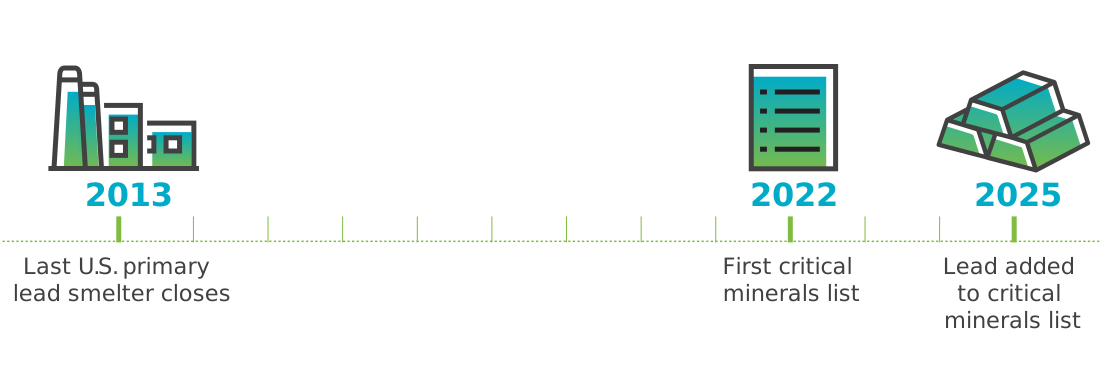
In November 2025, the U.S. Geological Survey added lead to the Final 2025 List of Critical Minerals. This designation affirms what ABR members have long understood: lead battery recycling is an essential industry that helps secure the domestic supply of materials critical to our economy and communities.

Critical minerals are materials essential to economic and national security that face supply chain vulnerabilities. These materials typically have:
Lead battery recycling addresses these challenges by recovering materials from end-of-life products rather than relying on foreign sources or new mining operations.
The U.S. produces zero primary lead. Lead concentrates from domestic mines are exported for processing. Without battery recycling, we would depend heavily on imports for lead—a material that powers:
Domestic lead battery recycling supplies 70% of U.S. lead demand. This makes the recycling industry essential to maintaining the reliable power systems that communities across America depend on daily.









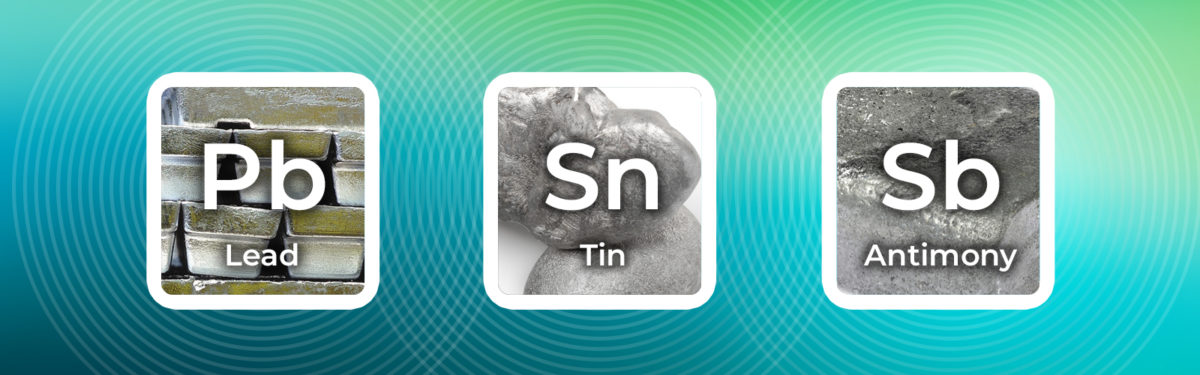
Battery recycling simultaneously recovers three critical minerals:
Lead – The primary component of batteries; recycling supplies 70% of domestic demand, making it the dominant source of refined lead for domestic use.
Antimony – Critical alloying element that strengthens battery grids; China produces 48% globally and imposed export restrictions in December 2024. Battery recycling supplies ~18% of U.S. antimony demand—one of the few domestic sources.
Tin – Enhances corrosion resistance in battery alloys; ~10,000 tons recovered annually, representing 27% of U.S. consumption.
When Supply Chains Are Disrupted
When China restricted antimony exports in December 2024, global prices doubled overnight. Import-dependent industries faced sudden uncertainty and cost increases.
Battery recycling operations continued recovering antimony alongside lead and tin, demonstrating the stability of domestic recycling operations during foreign supply chain shocks.
Lead, tin, and antimony can be recycled indefinitely without degrading in quality or performance. The same atoms may have been in use for decades.
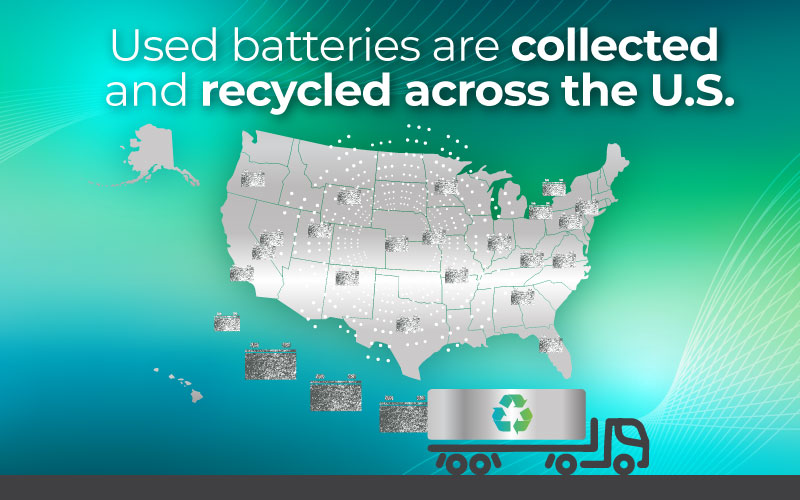
Established & Reliable: Over 300,000 collection sites and processing facilities operate nationwide, creating a distributed system that prevents single points of failure.
Energy Efficient: Recycling uses 90% less energy than primary production, reducing both operational costs and environmental impact.
Environmentally Responsible: Modern facilities invest heavily in emission controls and environmental protection, operating under some of the most rigorous environmental standards in any industry.
Economic Impact: Recycling facilities provide skilled jobs in metallurgy, engineering, logistics, and operations, contributing to local economies through employment and tax revenue.

ABR members operate under stringent environmental, health, and safety regulations that ensure responsible recycling. This commitment to excellence means:
The combination of high recovery rates and rigorous standards positions U.S. battery recycling as a model for responsible critical minerals recovery.
Unlawful exports of spent lead batteries allow critical minerals—lead, antimony, and tin—to leave the United States and North America circular economy. These exports undermine domestic supply security and the infrastructure ABR members have built.
Exporters may conceal unlawful activity through mislabeling shipments, false documentation, routing through multiple jurisdictions, or misrepresenting battery condition. Each unlawful export removes valuable critical minerals from the domestic supply chain.

Curtailing these unlawful exports would allow current recycling facilities to operate at full capacity, encourage investment in future expansion, and strengthen domestic critical minerals supply. As the industry works to keep more end-of-life batteries in the United States for recycling, there’s potential to further strengthen domestic supply security and reduce reliance on foreign sources.
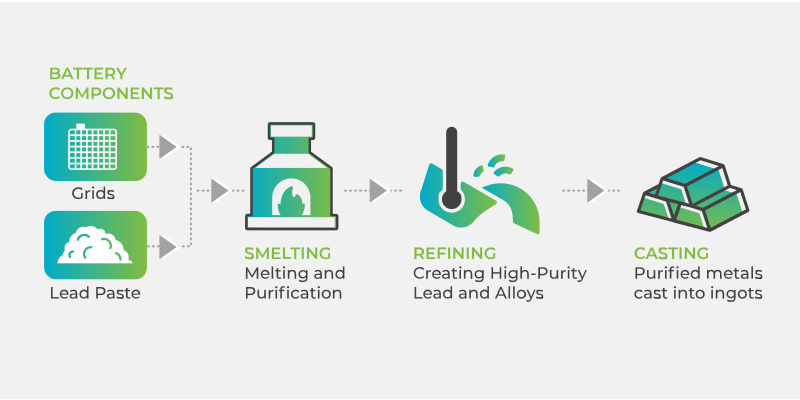
Lead’s designation as a critical mineral highlights the strategic importance of the entire battery recycling system. Understanding how this closed-loop process operates—from collection through processing to manufacturing—shows why this infrastructure is essential to domestic supply security.
