WELCOME TO OUR BLOG

Battery Industry Launches Assurance Framework To Promote Responsible Production and Raw Material Sourcing

January 30, 2025

LeadBattery360 Logo

LeadBattery360° (LB360) responsible production assurance framework aims to improve global supply chain practices in the lead battery sector.

A new program to promote sustainable and responsible production practices in the lead battery supply chain has been launched by a global coalition of industry associations.

The LeadBattery360° (LB360) certification program will identify leaders in responsible production and material sourcing practices within the lead battery supply chain. The program is open to any industrial site involved in lead battery manufacturing, recycling, or primary lead production. It is expected that multiple sites worldwide will sign up for the new program in its first year.

The LB360 responsible production assurance framework has been developed by the International Lead Association, Battery Council International, the Association of Automotive and Industrial Battery Producers (EUROBAT), and the Association of Battery Recyclers. A not-for-profit foundation based in the United States will manage the effort supported by a multi-stakeholder advisory panel made up of a wide range of stakeholders including customers, investors, regulators, and civil society.

Under the framework, organizations will be independently assessed by a third party to confirm they have successfully implemented policies and practices that meet the requirements of the LB360’s seven “guiding principles”.

The LB360° guiding principles are:

  • Support responsible battery manufacturing and recycling by placing environmental health and safety excellence at the heart of operations.
  • Promote the sound management of lead exposure and emissions by setting continuous improvement targets and sharing best practices.
  • Adopt responsible sourcing policies for lead-containing materials, seek to identify risks in the supply chain, and use influence to promote best practices for EHS performance in suppliers’ operations.
  • Minimize the environmental impact of products by encouraging the development of programs that ensure effective collection, transportation and environmentally sound recycling of used lead batteries.
  • Adopt business practices that consider the communities impacted by operationsrespect the human and labour rights of employees and work against corruption in all forms.
  • Proactively engage key stakeholders in an open and transparent manner.
  • Partner with key stakeholders and government agencies to share our expertise and promote environmentally sound recycling of lead batteries low- and medium-income countries.

Participating companies will sign a letter of commitment to the program and complete a site assessment within 12 months. They will need to demonstrate that they fully meet critical LB360 performance expectations and agree to address any other gaps through a performance improvement plan within 24 months of signing the letter.

Dr. Andy Bush, Executive Director of the International Lead Association, said: “Through this scheme, the companies who have signed up for the first wave of assessments are demonstrating their commitment to adopting the highest standards of stewardship across the lead production and battery manufacturing industries. This is a first of its kind in our industry. And the new foundation, supported by a multi-stakeholder advisory board, will ensure the scheme has robust and independent governance.”

“Battery Council International has a long history of supporting industry-led health and safety standards across North America that are stricter than those created by local government regulators,” said Roger Miksad, President and Executive Director of Battery Council International. “LeadBattery360 will allow our industry to share its expertise and best practices that already protect the health and safety of millions of citizens in the U.S. and Canada and help battery companies everywhere in the world operate as safely and responsibly as BCI’s member firms do.”

Mark DeLaquil, General Counsel of the Association of Battery Recyclers, said: “The LeadBattery360° framework represents an important opportunity to extend responsible recycling practices. While facilities in the U.S. and Canada already operate under the world’s most stringent environmental, health, and safety standards, this program allows the industry to share expertise and help establish similar standards globally. We are proud to support this initiative as part of our ongoing commitment to empowering responsible recycling and advancing sustainability worldwide.”

Gert Meylemans, General Manager of EUROBAT, said: “EUROBAT and its members are proud to support the LeadBattery360° initiative, a key step in promoting responsible and sustainable practices across the global lead battery supply chain. This program strengthens environmental and social standards in both developing and mature markets while reaffirming the industry’s commitment to ethics and continuous improvement. EUROBAT looks forward to further promoting LeadBattery360° among its members and European member states.”

For more information on LB360 please contact Hywel Jarman at ILA on +44 7718 483887 or Jarman@ila-lead.org or Jeff Reeves at Battery Council International, via media@batterycouncil.org


About Lead Battery 360°

In 2019, a global alliance of lead and lead battery industry groups adopted a set of seven Guiding Principles designed to help further protect workers and the environment. The Guiding Principles are designed to promote sustainable practices in three key areas. First, to encourage continuous improvement in the management of lead exposure and emissions through responsible health and safety and environmentally sound production practices. Second, to promote the adoption of responsible sourcing policies, working through supply chains to ensure that the lead used for battery manufacturing is sourced from companies that uphold high environmental, social and governance (ESG) standards. Third, to further minimize the environmental impact of used lead batteries through responsible recycling practices.

About International Lead Association

ILA is the only global trade association dedicated exclusively to representing lead producers and supporting a sustainable future for lead. Many of our members are companies recycling lead from end-of-life products, contributing to a circular economy by creating economic value from waste. ILA members also produce lead from mining, smelting and refining of lead ores and concentrates. Associate members include companies with a direct interest in lead and its many important uses.

About Battery Council International

Battery Council International (BCI) is the leading trade association representing the global battery industry and is the premier authority on energy storage solutions. Celebrating its 100th anniversary in 2024, BCI advocates and educates on behalf of battery manufacturers and recyclers, marketers and retailers, suppliers of raw materials and equipment, and battery distributors. With a unified voice, BCI conveys an industry-wide commitment to sustainability, safety and science. The organization continues to unite members within the battery industry to successfully communicate and protect through education, science and advocacy efforts the most successful circular economy on the planet. With 99% of used lead batteries collected and recycled in the U.S. and the typical new lead battery containing 80% or more of recycled materials, BCI supports the path toward similar sustainability goals for all other battery chemistries. For more information, visit www.batterycouncil.org

About EUROBAT

EUROBAT is the leading association for European automotive and industrial battery manufacturers, covering all battery technologies, and has more than 40 members. The members and staff work with all policymakers, industry stakeholders, NGOs and media to highlight the important role batteries play for decarbonised mobility and energy systems as well as numerous other applications. www.eurobat.org

About Association of Battery Recyclers

The Association of Battery Recyclers (ABR) represents the companies and employees who solve an unseen problem: responsibly recycling the more than 160 million used lead batteries that the United States disposes of each year. Instead of filling landfills, the U.S. recycling industry turns discarded lead battery components into highly valuable, raw materials for new products.

Logos of participating organizations in LeadBattery360.

Posted in: News

Tags:

Industry Collaboration Supports Environmental Excellence

January 16, 2025

Evergreen trees, a lake and a blue sky with Supporting Environmental Excellence text.

North American lead battery recyclers are deeply committed to achieving the highest levels of environmental protection in their operations. To foster this goal, the Association of Battery Recyclers (ABR) hosts semiannual meetings where industry leaders come together to share knowledge, discuss innovations, and collaborate on best practices.

At the recent ABR meeting, members participated in an environmental panel on best practices for emissions control, featuring insights from industry experts, including Mark Hoffman, Environmental Director at Ecobat Resources; Eric Peffel, Director of Environmental Affairs at East Penn Manufacturing Co.; and Mike Casper, Director of Environmental Engineering at Motrex LLC. The session highlighted the industry’s dedication to maintaining stringent environmental standards and continuously improving processes to safeguard employees, communities, and the environment.

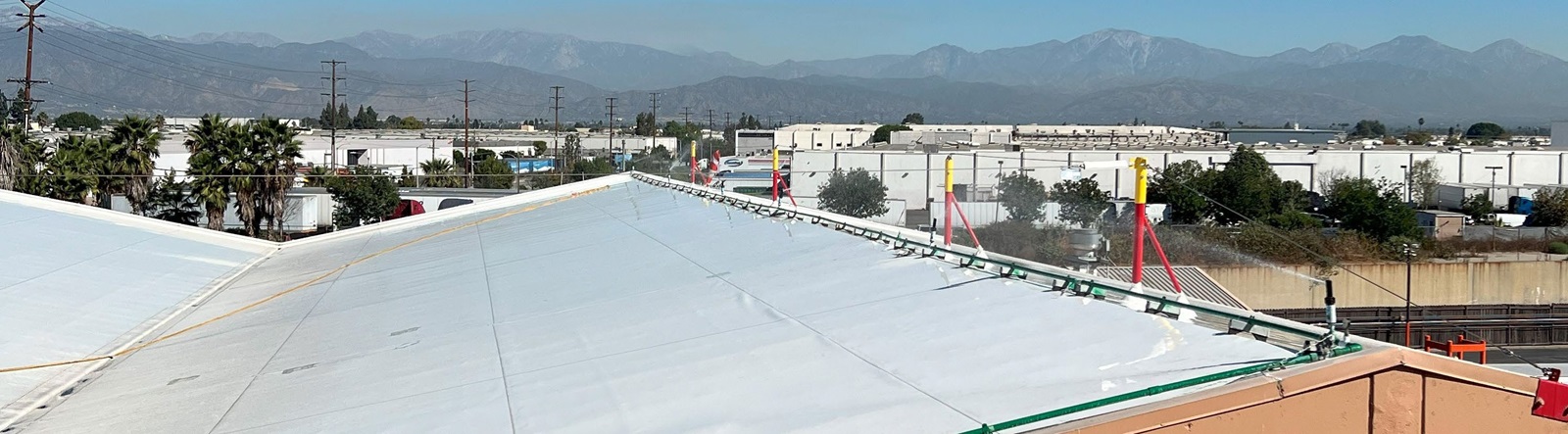
Lead battery recycling facility rooftop sprinkler to control emissions for environmental excellence.

Innovative Emissions Control Strategies

During the panel discussion, representatives shared insights into effective approaches for minimizing emissions, including the use of advanced monitoring systems, strategic facility design, and proactive maintenance protocols. These practices exemplify how lead battery recyclers integrate technology and expertise to address environmental challenges.

Key topics included:

  • Stack testing by a third party and the use of cutting-edge filtration systems to reduce emissions.
  • Dust mitigation measures, such as facility washdowns and rooftop sprinklers.
  • Temporary enclosures with negative pressure for maintenance tasks to prevent the release of fugitive emissions.
Lead battery recycler with truck spraying water on pavement for a facility washdown to control emissions.

The Role of a Safety-First Culture

Emissions control doesn’t rely on technology alone—it’s grounded in a robust, safety-first culture. Participants at the meeting emphasized that fostering this culture is essential for effective environmental stewardship and ensuring operations meet the highest standards.

A multifaceted approach to emissions control integrates several key elements, including indoor air quality, building and process design, and outdoor environmental considerations. By combining these technical measures with enhanced management and work practices, companies can create a comprehensive system for monitoring and reducing emissions.

Success in emissions control stems from aligning corporate expectations with a safety-first mindset. This alignment ensures teams are trained and equipped to address challenges proactively. Dedicated housekeeping teams and strong internal response protocols allow companies to react immediately to potential issues, minimizing risk and maintaining compliance.

This culture of safety not only supports the technical aspects of emissions control but also reinforces the industry’s broader commitment to protecting employees, communities, and the environment.

Planning Ahead and Choosing the Right Partners

The panel underscored the importance of pre-job planning in controlling and monitoring fugitive emissions. Key recommendations included:

Diligence 24/7/365 — emissions control involves constant vigilance.
Workforce training to establish good practices, including managing the movement of lead from interior to exterior spaces.
Adherence to fugitive dust control plans, covering equipment maintenance, building exits, and roadway surfaces.

Protecting the Environment for Everyone

ABR member companies and their employees work every day to ensure the safety of the environment for the communities in which we live and work. As a result of these efforts, U.S. lead battery recyclers’ total lead emissions to air account for less than 1% of total U.S. air lead emissions.

Panels like this provide invaluable opportunities for the industry to collaborate on best practices and emerging technologies, furthering their commitment to continuous improvement.

Learn more about the industry’s environmental best practices.

Posted in: News

Tags:

The Night After Christmas: A Greener Tomorrow

December 26, 2024

T’was the night after Christmas, and all through the town,
The packaging lay scattered, tossed all around.

But don’t let it linger; let’s make it all right,
Recycle those boxes and cards in your sight.

Old toys, small appliances, electronics, too,
Can all find new uses when recycled by you.

Lead batteries, light bulbs, papers, and cans,
Recycle them all — the future’s in our hands.

Curbside and drop-off, it’s simple to do,
Healing the Earth starts with choices by you.

Each sustainable action you take helps the planet to grow,
Through sunshine, or rainfall, or fresh-falling snow.

Our lakes will shine brighter, our parks lush and green,
A world that’s much cleaner, both joyful and serene.

So kids, take this message, and don’t let it stray,
Recycling’s a habit for every new day!

And grown-ups, remember — this story is true,
The future depends on recycling by you.

Together we’ll work for a future that’s bright.
With clean land, air and water — a world of delight.

Posted in: News

Tags:

America Recycles Day: Celebrating Lead Batteries as a Successful Circular Economy Example

November 15, 2024

Teal background with circular economy example circle and a lead battery for America Recycles Day.

Recycling Lead Batteries Supports a Sustainable, Closed-Loop System

Every November 15, America Recycles Day highlights the importance of recycling and the critical role it plays in preserving our environment, conserving natural resources, and building a sustainable future. For the Association of Battery Recyclers (ABR) and its member companies, this day shines a spotlight on the impact of lead battery recycling — an essential element of a powerful circular economy example and a model for sustainability. Lead battery recycling not only protects the environment but also creates thousands of green jobs, ensures essential resources for domestic battery manufacturing, and supports the critical power needs of our everyday lives.

Lead Batteries: A True Circular Economy Example

The lead battery industry has achieved an extraordinary level of recycling success, with an impressive 99% recycling rate in the U.S., the highest for any consumer product. This accomplishment reflects a dedication to responsible environmental stewardship, advanced recycling practices, and continuous innovation. Designed and engineered to be broken down and recycled, nearly every component of a lead battery can be recovered and reused, creating a fully sustainable cycle.

Essential applications supported by lead batteries.

Lead batteries are critical power sources across numerous sectors, from automotive and renewable energy storage to backup power for essential facilities such as hospitals and data centers. As the second-largest market in the global rechargeable battery industry, lead batteries continue to play a key role in meeting growing energy demands. The sustainable recycling process for lead batteries ensures a reliable supply of materials that can be continuously returned to the battery manufacturing cycle. In fact, through this process, U.S. lead battery recyclers meet approximately 59% of the country’s demand for lead, exemplifying a closed-loop, sustainable approach. Each year, ABR member companies recycle more than 160 million used batteries, ensuring that lead, plastic, and even battery acid are reprocessed and used again in new batteries or other applications.

A Nationwide Effort to Close the Loop

The success of lead battery recycling in the United States is driven by a nationwide commitment among manufacturers, retailers, recyclers, and government agencies to create accessible recycling channels for consumers and businesses alike. With over 300,000 drop-off locations nationwide, recycling is convenient and readily available. This extensive network enables Americans to recycle their spent batteries responsibly, helping prevent hazardous waste and keeping valuable materials in circulation.

Three engineers working on innovation for lead battery recycling and the circular lifecycle of lead batteries.

ABR members are continually exploring innovative ways to enhance the sustainability of lead batteries and the recycling process. Through strategic partnerships with the U.S. government, universities, and national laboratories, they collaborate on cutting-edge research to drive technological advancements. These innovations not only result in more powerful, longer-lasting energy storage solutions but also bring the industry closer to achieving a zero-waste product. By working with key stakeholders, the industry is advancing in areas such as resource efficiency and recycling technology. These efforts strengthen lead batteries’ role as a leading example of the circular economy, demonstrating how sustainable design and recycling can effectively work together to minimize waste and maximize resource efficiency.

Watch the Journey: Lead Battery Recycling in Action

This America Recycles Day, we invite you to explore our exclusive Circular Economy video — a comprehensive look at how the lead battery industry closes the loop, illustrating a remarkable circular economy example in action. This engaging video follows the journey from design and innovation to recycling, showing how ABR members use innovative processes to reclaim and repurpose materials, turning old batteries into essential resources for new products. Witness how the lead battery industry leads the way in sustainability and learn how your everyday choices contribute to a healthier planet.

A Shared Mission for a Greener Future

The lead battery industry’s commitment to recycling is part of a larger mission to protect resources and meet the rising demand for energy in an environmentally responsible way. As America Recycles Day reminds us, recycling is not just an action — it’s a pledge to protect our planet for future generations. By recycling lead batteries, we help reduce waste, lower emissions, and conserve resources, supporting a cleaner, greener future.

ABR members are are proud to be part of this mission. Together with consumers, retailers, manufacturers, and policymakers, we are driving a successful circular economy example that keeps critical materials in circulation, reduces environmental impact, and powers progress across the U.S.

This America Recycles Day, join us in celebrating the transformative power of recycling. Let’s keep moving forward, one battery at a time, toward a more sustainable world.

Posted in: News

Tags:

The Lifecycle of a Lead Battery — A Story of Unmatched Sustainability

November 11, 2024

Blue graphic with text on the lifecycle of lead batteries.

For more than 100 years, the lead battery has provided essential power to keep us moving, connected, and protected. It’s the often-overlooked workhorse that powers our daily lives and economy. From vehicles to renewable energy storage systems to backup power for data centers, hospitals, and other critical infrastructure, we rely on lead batteries every day to power 30% of our global energy storage needs.

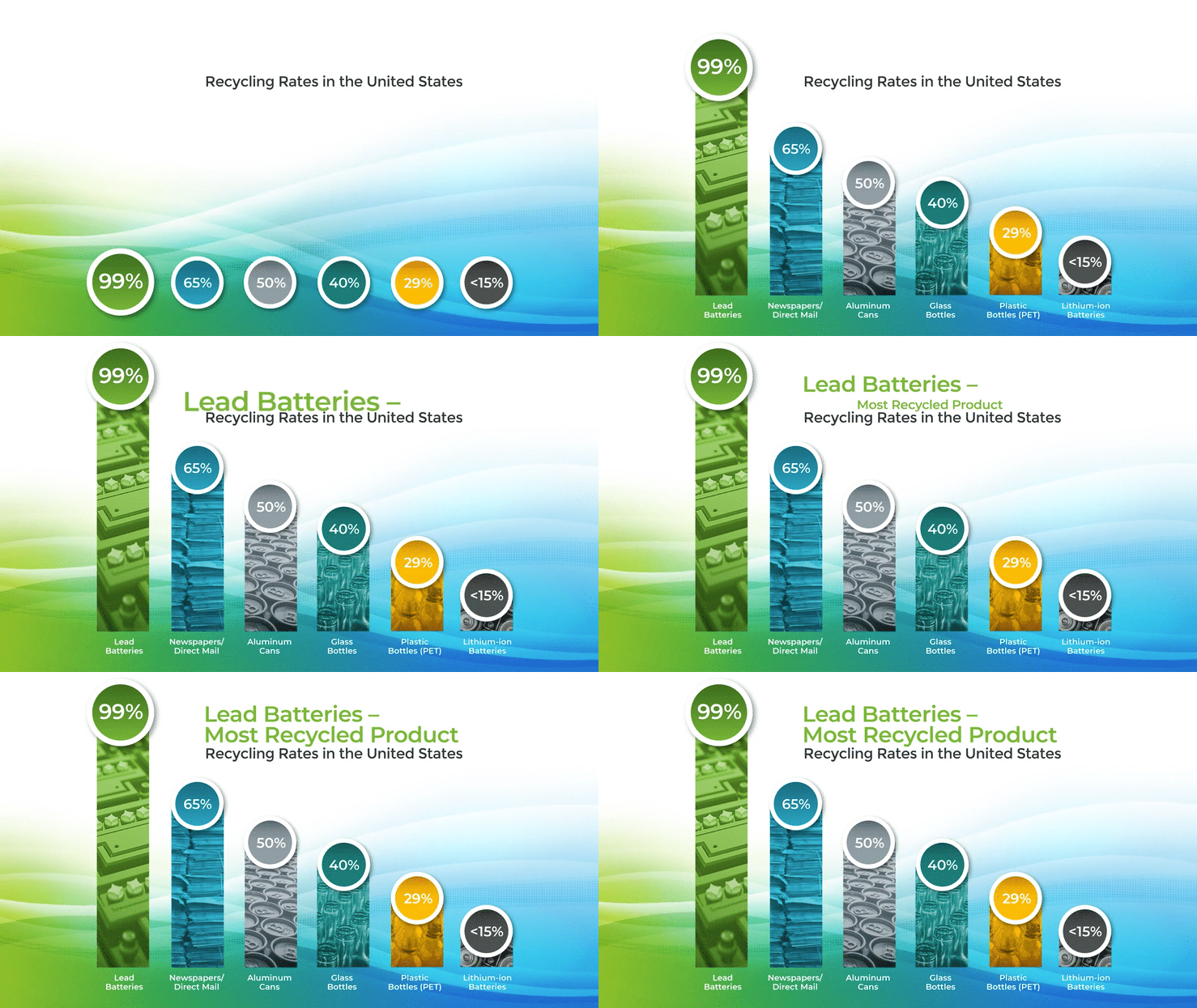
Not to mention, with an incredible 99% recycling rate in the U.S., the lead battery industry is a trailblazer in sustainability — leading the way as a model circular economy for other industries. Association of Battery Recyclers (ABR) member companies are a critical link in this closed-loop value chain by responsibly recycling more than 160 million used batteries each year — turning discarded lead battery components into highly valuable, raw materials for new products.
To better understand how the domestic lead battery industry has accomplished this amazing feat, let’s take a closer look at the full lifecycle of a lead battery. Watch our new Circular Economy Spotlight video — the first of its kind to dive deep into the circular lifecycle of lead batteries.

Designed to be Recycled

From the start, lead batteries are designed to be recycled. But that doesn’t mean they aren’t technologically advanced. Battery manufacturers are continually innovating, developing new technology to improve performance and extend the lifecycle of each battery. In fact, the life expectancy of lead batteries has increased by up to 50% or more over the past 20 years.

Engineered for Endless Renewal

Did you know the three main components of a lead battery are 100% recyclable? Using components made of materials that can be recycled repeatedly not only keeps these materials out of landfills, it ensures a continuous supply of valuable metal and materials that are remanufactured into new batteries. More than 90% of lead batteries sold in the U.S. are produced in North America.

Collage with images of applications in the lifecycle of lead batteries supporting our everyday lives.

Enabling Nearly Every Industry

Lead batteries play an important role in powering our daily lives and the U.S. economy. They are used in nearly every vehicle, factory, warehouse, data center, medical facility, and utility — keeping us moving, connected, and protected all day, every day.

Convenient Collection Sites

When it comes to recycling lead batteries, the industry has worked hard with manufacturers, retailers, recyclers, and government agencies to ensure there are no excuses. With a network of more than 300,000 collection sites in the U.S., recycling lead batteries is convenient for everyone. And because nearly all the materials in spent lead batteries have value, recycling is incentivized for businesses and consumers.

Nearly 100% Recyclable

Inevitably, all lead batteries will reach end-of-life. When the time comes, ABR member companies are here to ensure they are recycled responsibly  — turning discarded lead battery components into highly valuable, raw materials for new products.

Spent lead batteries are broken down and the materials are separated. Reclaimed lead, which is endlessly recyclable, is smelted, refined, and reused in new batteries. The reclaimed plastic pieces are washed and recycled into pellets to be reused in the manufacturing of new battery cases. Reclaimed acid is either neutralized and reused in the recycling process or reclaimed for manufacturing new batteries.

ABR Members Meet Critical Demand

It’s no accident that lead batteries are the #1 most recycled consumer product in the U.S. It’s a carefully choreographed collaboration between the lead battery industry and consumers to close the loop and create a fully sustainable circular economy. Every day, hundreds of semi-trailers filled with spent batteries make their way to cutting-edge recycling facilities. As a result, U.S. lead battery recyclers are able to meet 59% of domestic lead demand — ensuring manufacturers have a continuous supply of the resources they need to help power progress and provide energy security.

Powering a Sustainable Future

As we look to a more sustainable future, the lead battery industry stands out as a model of the circular economy in action. Through continuous innovation and responsible recycling, ABR member companies ensure that lead batteries not only power our present but are also poised to meet the energy demands of tomorrow. By choosing lead batteries and supporting recycling efforts, we all contribute to a greener planet—one that benefits from an endlessly renewable supply of vital resources. Together, we can keep closing the loop for a cleaner, more sustainable world.

Posted in: News

Tags:

How Battery Recycling Secures Essential Resources for Domestic Manufacturing

October 9, 2024

Domestic lead battery manufacturing is a prime example of a closed-loop, circular economy that is both economically viable and sustainable. With a well-established network that includes manufacturing, collection, and recycling across North America, the lead battery industry is virtually self-sustaining, with materials continually cycled through the process over and over again.

Let’s explore how this successful circular economy ensures a consistent supply of essential resources for lead battery manufacturing.

Moving Beyond the 3Rs: A Truly Circular Economy

A true circular economy requires more than just reducing, reusing, and recycling. It involves closing the loop by recovering materials once a product reaches its end-of-life stage. Industries must rethink how products are made and used in a way that intentionally minimizes waste and preserves natural resources. This can be achieved in several ways:

  • Designing products that last longer
  • Using fewer materials during production
  • Utilizing materials that can be fully recovered at the end of their use

The lead battery industry incorporates all these principles, offering a sustainable, recyclable solution that not only supports a circular economy but also reduces environmental impact.

Lead Battery Recyclers: Critical Players in Resource Conservation

Association of Battery Recyclers (ABR) member companies play a critical role in reducing the extraction of new materials from the Earth while ensuring essential resources remain available for domestic battery manufacturing, which is vital to the U.S. economy. Domestically produced batteries are essential to day-to-day activities and critical operations. According to an economic analysis by independent research firm EBP US, the battery industry powers nearly 20% of the U.S. economy, contributing $8.1 trillion in domestic economic output and supporting nearly 48 million U.S. jobs. Notably, a new lead battery typically contains 80% recycled material, highlighting the pivotal role of recycling in sustaining this economic powerhouse.

99% of Lead Batteries are Recycled

The lead battery industry has created a strong domestic infrastructure that includes manufacturing, collection, and recycling facilities. These partnerships plus collaboration between industry and policymakers created a nationwide network of more than 300,000 collection sites, making recycling convenient for everyone. The result is an unparalleled 99% recycling rate for spent lead batteries — ensuring a steady stream of materials for manufacturing new batteries.

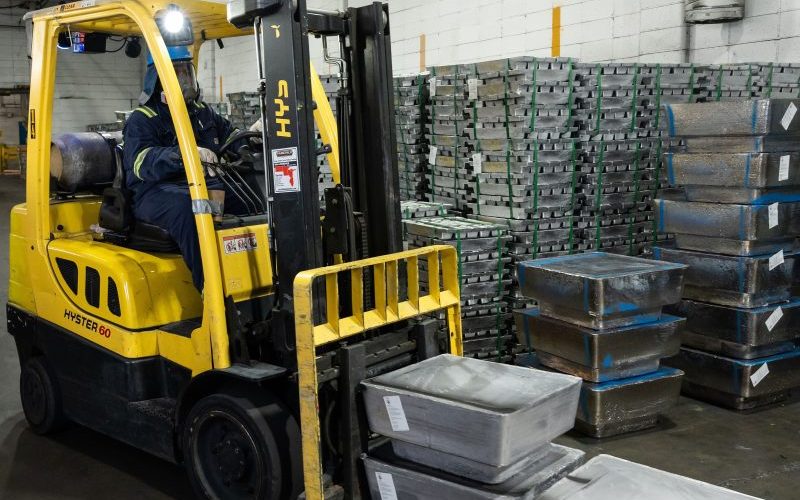
Forklift with lead ingots and stacks of recycled lead ingots to supply raw materials to manufacturers.

Sourcing Lead from Recyclers Saves Resources

While the U.S. has natural deposits of lead and a well-established, environmentally responsible mining industry, only a small portion of lead from new mining is used in batteries. In fact, 83% of the lead used by U.S. battery manufacturers is sourced from North American recyclers. Using recovered lead and plastic to produce new batteries helps conserve natural resources and requires 90% less energy than mining raw materials. Plus, lead is infinitely recyclable without any loss of future performance capacity, making it an invaluable resource for the industry.

Domestic Recycling Reduces Reliance on Foreign Countries

More than 90% of lead batteries sold in the U.S. are manufactured in North America. Using domestically sourced recycled lead, plastic and other materials to manufacture batteries significantly provides supply chain security. In contrast, other battery technologies, such as lithium-ion, rely heavily on minerals from other countries, leaving them more vulnerable to global supply chain disruptions.

A Model for Other Industries

As our need for reliable, sustainable energy storage solutions continues to grow, ABR member companies are committed to applying their expertise in lead battery recycling to other battery chemistries. By relying on our domestic supply chains, the U.S. can better support its growing energy needs, leading to a more secure and sustainable energy system and economy.

Posted in: News

Tags:

With Safety Top of Mind, Battery Recyclers Value Cooperation Over Competition

June 17, 2024

Graphic with employee health and safety images and copy to reinforce that lead battery recyclers collaborate to improve employee health and safety.

North American lead battery recyclers collaborate regularly, sharing best practices, insights and innovations to continually enhance worker safety. It’s part of an intentional industry culture that values cooperation over competition to solve shared challenges.

The Association of Battery Recyclers (ABR) fosters this collaborative mindset by providing opportunities for member companies to share their knowledge of environmental and safety policies and controls to protect the health and safety of employees, contractors and communities.

Representatives from ABR member companies convened at the organization’s annual spring meeting to share best practices and insights gained as the industry works continuously to improve employee health and safety.

The meeting featured a panel discussion on worker safety with panelists from member recycling companies presenting on lessons learned in their own operations and participating in a lively and informative Q&A with the audience.

Create a Culture of Safety

Jordan Geist of East Penn Manufacturing gave a presentation on the importance of creating a culture for safety, especially within his oversight of the company’s Metals Division. . By embracing the approach “we are all in this together” and leveraging industry partnerships for ideas and best practices, battery recyclers can build a proactive safety culture.

To achieve a culture of safety, companies have developed comprehensive safety training programs that condition new employees to follow safety protocols and reinforce best practices with existing employees. A successful proactive safety culture will focus on individual responsibility and hazard risk assessment. Establishing a strong safety committee to serve as an “army of problem solvers” helps drive action and engagement with all employees.

By implementing an even greater focus on their culture of safety, East Penn found employees were more engaged, aware and consistent across various aspects of their daily routines. As a result, the company saw:

  • 85% retention of trained employees
  • Overall reduction in injury rate by 60% over the last 12 months
  • Even better results from protection strategies against potential exposures
Lead battery recycler employee washing her hands for good worker hygiene.

Focus on Hygiene

In his presentation, A.J. Williams of Ecobat emphasized the importance of worker hygiene as a key component to keep employees safe and reiterated the need to make it part of a larger culture of health and safety. While acknowledging there are challenges, he underscored the importance of strong mentoring and training in making hygiene second nature company-wide.

Williams recommended a variety of best practices and lessons learned that helped Ecobat improve its own health and safety results, including:

  • Making good hygiene easier for employees by improving flow using LEAN manufacturing practices
  • Implementing supplementary deep cleaning of common areas (break room, locker room, etc.) by a third party
  • Establishing internal audit teams and utilizing third-party audits, including conducting root cause analysis.
  • Focusing on job risk assessment for non-routine activities — don’t just focus on routine activities, it’s the tasks that aren’t done very often where issues arise because without established procedures or a Job Risk Assessment, safety best practices are not always followed
  • Ensuring temporary fixes don’t become permanent fixes
Training room with woman training employees on lead battery recycling safety.

Invest in Worker Safety Initiatives

ABR member companies make substantial, ongoing investments to ensure their operations meet and exceed the highest environmental, health and safety regulatory standards in the industry.

Throughout the presentations and panel discussions with the audience that followed, several common themes emerged that indicate worker safety continues to be a top priority for the industry.

Companies and workers both continue to value transparency and education as keys to effective health and safety initiatives. There needs to be investment by both for the initiatives to be successful. It is also clear that leaders and supervisors must lead by example.

Many companies are finding value in using multifaceted training approaches that incorporate in-person training in a classroom with a combination of apps and videos. Using more pictorial materials and conducting hands-on training where the work happens is also proving to be extremely effective.

One common theme that emerged was the importance of including contractors, not only in health and safety training but also in audits of these programs to ensure they are effective.

As an industry that plays a vital role in ensuring the environmental, health and safety of our communities, our businesses are invested in ensuring the success of these initiatives.

Posted in: News

Tags:

Celebrating Our Recycling Heroes

March 18, 2024

Recycling Heroes text for Global Recycling Day 2024.

Honoring Our Recycling Heroes on Global Recycling Day

Each year, millions of used lead batteries conclude one of their lifecycles — destined to live again as new batteries thanks to the dedication of thousands of employees working in the lead battery recycling industry.

On Global Recycling Day, March 18, we join the industry in honoring these #RecyclingHeroes, who work every day to prevent more than 160 million lead batteries from reaching landfills annually.

Economic and National Security Impact

According to a report commissioned by Battery Council International, the U.S. lead battery recycling industry provides nearly 3,500 good-paying, direct jobs in 10 states. These workers are part of an established infrastructure that advances sustainability and ensures a reliable domestic supply chain for lead battery manufacturers.

Without domestic lead battery recycling, the U.S. would need to import 1.6 million tons of lead annually. The industry fulfills 59% of domestic demand for lead, reducing the need to ship spent batteries to countries with lower environmental and health-protection standards, protecting communities everywhere.

What Do Recycling Heroes Do?

Graphic illustration of a lead battery recycling hero.

The lead battery recycling industry provides thousands of green jobs dedicated to protecting the planet. As part of the most successful example of a closed-loop, circular economy, domestic recyclers transform spent lead batteries back into valuable raw materials that are used to manufacture new batteries. Accomplishing this feat requires the hard work and expertise of employees in a wide variety of roles — from engineering positions to furnace operators and everything in between.

Plant Operations
Plant operators function in a variety of roles depending on the part of the recycling process on which they work. Sorters inspect the batteries received to ensure that only lead batteries enter the recycling system. Operators working on the smelting process may work with the blast furnaces, refinery or casting to turn reclaimed lead into new lead ingots.

Plant operations employee for lead battery recycling facility.

Operators working in plastics recycling will oversee the process of turning reclaimed plastic from the battery crusher into new plastic pellets for use in manufacturing new battery casings. Others may manage the distillation process that turns used battery acid into sodium sulfate.

Engineering
A variety of engineering specialties are needed to ensure the safe and efficient operation of lead battery recycling facilities. Process engineers are responsible for developing and implementing manufacturing processes. Metallurgical engineers oversee the extraction and processing of metals. Control engineers design, implement and monitor the process control systems that keep the plant operating smoothly.

Two women working in a lab at a lead battery recycling facility.

Lab & Quality Control
Lab analysts and technicians are responsible for monitoring the production process to ensure safety, quality, environmental, and production standards are met. In addition to identifying issues with process and/or quality control, lab workers may conduct tests and experiments in collaboration with other departments to determine a solution.

Electricians
Industrial electricians are critical to the day-to-day operations of a lead recycling facility. Electricians are responsible for electrical repairs and maintenance of all electrical systems, machinery and equipment within the facility. They must be able to troubleshoot issues as well as calibrate, install and perform preventive maintenance on a wide variety of systems.

Maintenance
Maintenance technicians play an important role in keeping recycling facilities up and running. They must be able to install, maintain, troubleshoot and repair equipment such as pumps, conveyors, gearboxes, flue pipes, water lines, burner systems, air compressors and hydraulic systems.

Maintenance employee at a lead battery recycling facility.

Material Handling and Logistics
Recycling facilities need capable material handlers to operate mobile equipment like front-end loaders and forklifts throughout the plant. Outside of the plant, logistics professionals make it possible to connect the network of collection, recycling and manufacturing facilities. Drivers pick up and transport spent batteries from collection sites for recycling, raw materials from recycling plants for manufacturing and new batteries to be shipped for retail distribution.

EHS employee washing her hands at a lead battery recycling facility.

Environmental, Health and Safety (EHS)
Ensuring the health, safety and wellbeing of our employees, their families and local communities is the top priority for North American lead battery recyclers. To accomplish this, our member companies employ EHS staff who are trained in all areas of environmental protection and worker safety.

These employees have dedicated roles that ensure environmental control systems are operating properly, appropriate operating procedures are followed and all required monitoring and testing are performed. They are also responsible for training production staff on safe operating procedures.

Lead Battery Recycling Heroes Are Leading the Recycling Revolution

As our nation transitions to clean energy storage and a low-carbon future, lead batteries are poised to play a key role as a safe, sustainable energy storage solution. With a 99% recycling rate, the highest collection and recycling rate of any battery in the U.S., lead batteries are the recycling industry’s greatest success story. Our work is critical to a sustainable future and would not be possible without the expertise and dedication of our #RecyclingHeroes.

Posted in: News

Tags:

Battery Recyclers Highlight Safety Efforts on National Battery Day

February 15, 2024

Collage of battery recycler employees and employee safety practices

Providing Essential Energy Storage to Power Everyday Lives

Imagine a world without the energy storage capacity of lead batteries. Without lead batteries to help power our cars, trucks and public transportation, we’d be a lot less mobile. Without lead batteries to provide critical backup power to data centers, our information would be less secure. Without lead batteries helping power our healthcare, public safety and defense systems, we’d all be less safe.

With applications in nearly every industry imaginable, lead batteries are essential to our everyday life. They are also the most recycled consumer product in the United States, with an astonishing 99% of spent batteries collected and recycled. Using highly efficient recovery processes, domestic recyclers transform spent batteries back into valuable raw materials that are used to manufacture new batteries.

As a direct result of the hard work of our employees, lead battery recyclers prevent more than 160 million lead batteries from reaching landfills each year. Their work is crucial to the success of a circular economy and sustainable energy storage. Which is why on National Battery Day, February 18, the lead battery recycling industry is sharing the important work we do to protect their health and safety each and every day.

Our #1 priority is employee health and safety

Protecting People is Our Top Priority

As an industry, lead battery recyclers are committed to the health, safety and wellbeing of our employees, their families, and the communities in which we live and work. Our employees do important jobs in sometimes demanding environments, which is why we comply with the most stringent environmental, health and safety standards in the world.

ABR member companies go one step further by continuously working to ensure their operations not only meet but exceed these standards. This includes investing in robust job safety and on-site hygiene programs, conducting comprehensive health and safety training, employing sophisticated safety equipment and environmental controls, and conducting regular monitoring to ensure these efforts continue to be effective.

How Do We Keep Employees Safe and Healthy?

Watch our new Employee Health and Safety video to hear directly from industry employees and learn more about the measures lead battery recyclers take to ensure their health and safety.

Working Together to Keep Each Other Safe

Ensuring a safe work environment is a collective endeavor that requires the cooperation and dedication of both employers and employees. From the moment our employees step into our facilities, their safety becomes our shared responsibility. Lead battery recyclers are committed to fostering a culture of safety, continuously improving safety protocols, procedures and equipment to mitigate hazards and prevent injuries.

Our top priority will always be the safety and health of our employees. By working together and embracing a culture of safety, we are not only protecting our workforce but also strengthening our communities and building a more sustainable future.

Visit our Employee Safety page to learn more about how the lead battery industry is working together to ensure the health and safety of our employees.

Celebrating National Battery Day and Prioritizing Safety, Innovation and Sustainability

On National Battery Day, let us not only celebrate the essential role of batteries in powering our everyday lives but also recognize the dedicated individuals who make it possible. By prioritizing employee health and safety, the lead battery recycling industry is not only advancing sustainability but also nurturing a workplace culture where every employee can thrive. Together, let us continue to prioritize safety, innovation, and sustainability as we shape a brighter future for generations to come.

Posted in: News

Tags:

Member Highlight: East Penn Manufacturing Launches Power2Recycle Campaign

February 8, 2024

Graphic with leaf and text for ABR member highlight of East Penn Manufacturing and Power2Recycle

The Inception of Power2Recycle

ABR member company, East Penn Manufacturing, recently launched Power2Recycle, a comprehensive environmental campaign to increase awareness about the role consumers play in properly recycling lead batteries.

Power2Recycle highlights the importance of the partnership between lead battery manufacturers, recyclers and the public in the ongoing success of the industry’s highly successful circular economy.

With Power2Recycle, East Penn is hoping to expand our industry’s success story by educating consumers about their role in the recycling process and empowering them to choose products like lead batteries that are designed to be endlessly recyclable and sustainable.

Fostering Industry Collaboration

“We were inspired by industry associations like ABR, BCI (Battery Council International) and ILA (International Lead Association), and all they’ve done in support of the industry to promote products that have a high rate of recyclability and are sustainable,” said Joel Brady, assistant vice president of marketing at East Penn. “It encouraged us to take a look here at East Penn and think about what we can do to amplify those messages and those efforts.”

Initiatives Driving Power2Recycle Engagement and Outreach

East Penn began the campaign in late 2023 with a Power2Recycle video on YouTube and quickly followed up with the creation of a dedicated web page at EastPennManufacturing.com/Power2Recycle. Both were shared and promoted on the company’s social media channels repeatedly over the next few months.

The initial goal of Power2Recycle was to reach at least a million people with the message that each of us has a crucial role to play in the circular economy of lead batteries. In its first few months of promotion, East Penn estimates the campaign has already reached more than 1.5 million people.

The company also issued a series of three press releases about the campaign to local, national and trade media, helping to increase awareness of lead battery recycling more broadly.

Customer brining in an old lead battery to recycle at the factory store

Strong Local Awareness and Community Response

The awareness campaign is already having an impact locally. After seeing stories in the hometown paper, the Reading Eagle, and on television station WFMZ, customers are bringing lead batteries to the East Penn factory sales store for recycling for the first time.

East Penn continues to build on the campaign with content they hope will help consumers sift through all the noise and confusing claims about conservation and environmental issues. Ultimately, they want consumers to see themselves in the story, understand their vital role in the process and feel empowered to make sustainable choices.

Sustainability in Product Design

East Penn’s full line of transportation batteries was recently validated by Underwriter’s Laboratory (UL) with an allocation of 98% recycled content, the world’s highest UL Recycled Content Validation for batteries. This milestone underscores East Penn’s commitment to environmental responsibility and showcases a groundbreaking step towards creating batteries with an exceptionally high level of recycled materials.

Underwriter Laboratory (UL) validation graphic for East Penn batteries

By sharing this accomplishment, East Penn aims to reinforce the collaborative impact achievable when manufacturers, recyclers and consumers unite, emphasizing our collective ability to make substantial contributions to the conservation of natural resources.

Employee Engagement and the Introduction of ManuCycling™

“The other thing that we did was we made sure that we communicated these objectives and accomplishments to our employees, because as much as we hope our employees understand the important role that they play in manufacturing it and its ties to recycling,” said Brady, “we didn’t want to take that for granted. So, we developed messages specifically for our employees that we put out through our employee app and have had over 8,000 employees engage with it.”

As part of its messaging to employees, East Penn coined the term ManuCycling™ to mean a completely integrated manufacturing and recycling process. A video on the Power2Recycle website helps explain the importance of this closed-loop system to efficiently turn old batteries into new.

Empowering Consumers for Sustainable Choices

East Penn is proud to be part of an industry that demonstrates what can be accomplished when consumers, recyclers and manufacturers work together toward a common goal. Through Power2Recycle the company hopes to continue to share the lead battery industry’s successful efforts to support resource conservation, integrated recycling and carbon reduction technologies with the world.

Posted in: News

Tags:

Battery Ballad: A Holiday Recycling Tale

December 21, 2023

In the holiday glow, a tale I bring,

Of lead batteries, a recycling thing.

Powering equipment and vehicles with might,

But what of their fate when they dim their light?

No landfill doom, no sorrow shall we feel,

In bins and centers, a green ideal to reveal.

A journey begins, a transformation starts,

From worn-out to new, in recycling arts.

Facilities hum with holiday cheer,

Plant workers adorned with festive gear.

Lead batteries reborn, a merry dance,

From old to new, a second chance.

Data centers to lighthouses, cars on the street,

Lead batteries find purpose, oh so sweet.

No more discarded, but cherished anew,

A holiday story, both vibrant and true.

As presents unwrap, joy in your eyes,

Think of lead batteries, a pleasant surprise.

Recycle with glee, in the spirit of giving,

Create a world where all keep on living.

In the cycle of seasons and eons untold,

Lead batteries find worth, more precious than gold.

This season decree, to recycle with cheer,

For a sustainable world and a greener new year.

Posted in: News

Tags:

Lead Battery Industry Comes Together to Advance Safety

December 18, 2023

Recycler employee representing the industry collaborating on employee respiratory safety

ABR’s Fall Meeting Focused on Employee Safety

Recently, ABR member companies came together during our 2023 Fall Meeting to share best practices and insights with peers. The annual conference is an opportunity for industry leaders to learn from each other and reaffirm our collective commitment of empowering responsible recycling of lead batteries through safe, sustainable practices and ensuring a cleaner, greener future for all.

Improving Safety Through Culture and Compliance

This year, attendees learned about improving safety by addressing the root causes of potential accidents and selecting personal protective equipment (PPE) that addresses worker concerns to increase compliance. Rob Medlock, senior occupational consultant with SCR Safety Solutions, shared insights into compliance and strategies for reducing injuries. Scott Shinn, application engineering specialist at 3M, spoke about the potential uses of powered air purifying respirator (PAPR) use in the lead battery recycling industry.

Keeping Employees Safe by Addressing Root Causes

As a consultant with SCR Solutions, Rob Medlock draws on more than 30 years of experience as a compliance officer and area director for OSHA. His presentation provided attendees with key insights for a safety management strategy at their facilities.

Everyone in the industry wants to reduce injuries and improve their safety culture. However, in his experience with OSHA, Medlock would see time and time again issues that were fixed after one inspection, reoccur on the next inspection. The reason for this is often that the underlying cause for the hazard was not addressed.

He emphasized the importance of incident analysis, not simply to fill out the form, but to understand the root cause and what is inherently wrong with the system or processes in place that allowed an incident or “near miss” to happen.

A root cause analysis focuses on identification of the real cause of a problem, rather than just the other contributing factors. If the root cause is corrected, it helps prevent recurrence of similar accidents or incidents.

Slide on the root causes for accidents and near misses

When you are building a safety culture within your organization, the goal of safety controls should be to engineer as many potential hazards out of the process as possible before resorting to additional PPE. To achieve this, it’s crucial for management and safety teams or consultants to collaborate directly with the employees doing the work.

Improving Respiratory Safety with Powered Air Purifying Respirators

Choosing the right respiratory protection for your workforce can be a challenge. It must provide adequate protection against respiratory hazards and be suitable for the environment in which it will be worn. But perhaps the greatest challenge is ensuring employees are complying with company guidelines for wearing the respirator provided. Regardless of the type of respirator used, the effective protection factor (EFP) is reduced every time an employee removes it.

Slide showing the effective protection vs U.S. OSHA assigned protection factor (APF)

Powered air purifying respirators (PAPR) use a battery powered motor blower to draw air through a filter or cartridge and delivers purified air to the worker. In his presentation, Scott Shinn of 3M shared a variety of challenges PAPRs can address.

Comfort is frequently a factor when it comes to lack of compliance for respiratory protection. A PAPR gives workers the option for a loose-fitting mask that may help in hot environments to reduce sweating and fogging that may occur with other, more tight-fitting masks.

PAPRs may also provide multiple PPE functions in a single piece of equipment, potentially replacing safety glasses or face shields and hard hats or bump caps, and are designed to work together to provide more robust protection. This can help reduce the number of eye injuries.

Because PAPRs are loose-fitting, they reduce the burden of fit testing on your safety team. They can also be worn with facial hair, eliminating the requirement for employees to be clean-shaven, which can be a benefit in a tight labor market.

Slide on the Powered Air Purifying Respirator (PAPR)

Overall, PAPRs provide a higher level of respiratory protection against airborne hazards that may be used in appropriate applications. However, Shinn recommends that companies should start with a PAPR trial and get feedback from a variety of users to identify and anticipate potential pain points. He also reiterates the importance of training workers to use, clean and maintain all aspects of PAPR equipment.

Fostering Continuous Improvement Through Collaboration

Through these semi-annual conferences, ABR provides member companies with ongoing opportunities to share best practices and learn from each other. We appreciate the willingness of our members and industry experts to collaborate as we all work together to continuously advance the safety and sustainability of the lead battery recycling industry.

Posted in: News

Tags:

Skip to content